Owned project · not a client reference
Help that shows where it comes from.
Purple Askepott is a free help site for women and men living with domestic abuse. Dave Gilligan built it in November 2026. It points people to checked help in Norway, Ireland, the UK and the US, and its assistant answers only from real help pages – and shows which ones. This is why it was made, and how.
Need help now? The Get help now page lists checked helplines.
Leaving the ashes
Why it exists
Someone living with abuse often looks for help in a hurry, late at night, on a phone someone else may check. The help exists – helplines, crisis centres, legal aid, health services and the police – but it is spread across many websites, in different languages, and every country arranges it differently.
In that moment a wrong phone number is worse than none, and a site that tracks its visitors can put them at risk. Purple Askepott was built to be the opposite: one calm place that says where to go, says it plainly and leaves no trail.
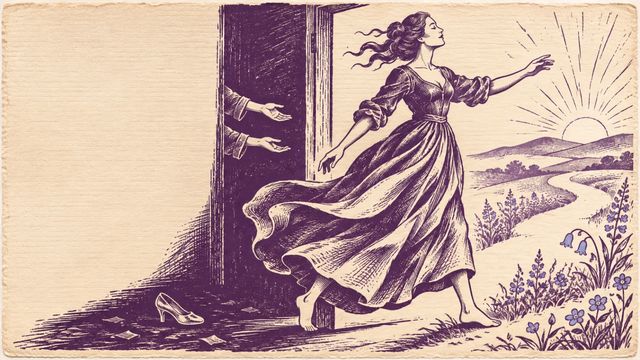
The name borrows Askepott, the Norwegian Cinderella. But here the fairy tale is not about being rescued. It is about walking out of the ashes on your own feet, with help within reach.
One site, four doors
Abuse does not only happen to women, and it does not only touch the person it is aimed at. The site speaks to women and men on equal terms, and has its own pages for children and for family and friends. Each door has its own plate.
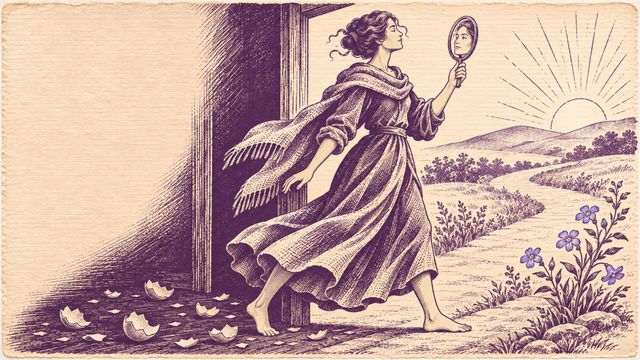
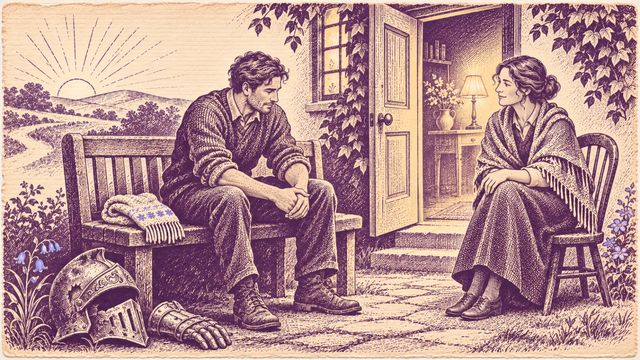


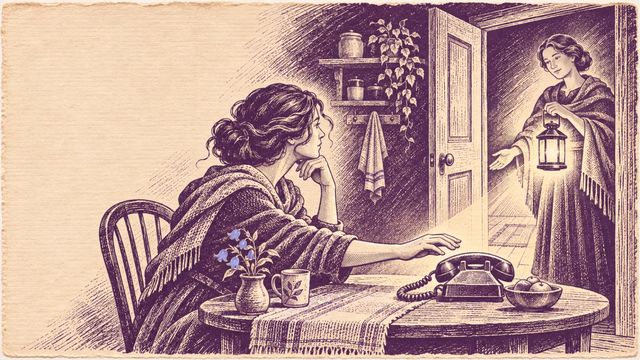
Four AI-generated illustrations from the pages on purpleaskepott.com.
Rules from day one
- Every phone number on the site comes from one checked list. The build refuses a number typed anywhere else, and no crisis-centre address is ever published.
- No tracking, no analytics and no cookies on the public pages. Nothing loads from other websites, and links to helplines do not tell them where the visitor came from.
- A Quick exit button on every page jumps straight to a weather site, and a separate page explains how to hide the visit.
- The assistant stores nothing that is typed into it.
- If a question points to danger, checked local help comes first – instead of, or before, an AI answer.
- The site is not an emergency service and gives no legal or medical advice. It points to the people who do.
Safety in small things
How it was built
Dave Gilligan built the site with AI coding agents – Claude Code from Anthropic and Codex from OpenAI – each working on its own branch. Dave reviewed and approved every release to production.
The site is static HTML produced by a small PHP build. Before every release a gate runs the tests; if one fails, nothing ships. Every release takes a snapshot that can be rolled back.
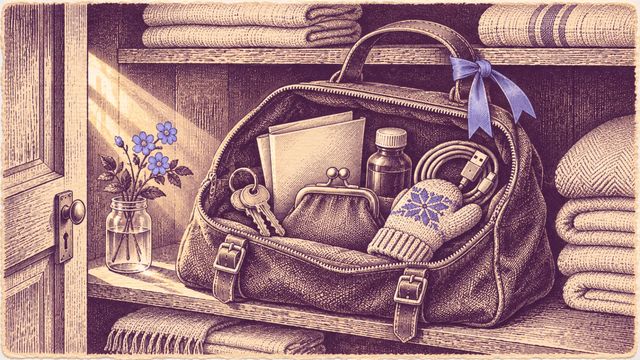
The plates were made with OpenAI’s image generation in Codex, in one engraved, purple-ink style. They retell Askepott as a story of leaving: a slipper left in the ashes, a packed bag, a lantern, an open door. The site also uses Arthur Rackham’s 1919 silhouette of Askepott, which is in the public domain.
The site went live on 4 November 2026 in English and Norwegian. In the days that followed it gained help by topic, coverage for Ireland, the UK and the US, and an Irish-language beta.
Help by topic
Help is sorted into eight topics: money, a place to live, legal help, police and protection, children, residence permits, health, and groups. Every service was checked against its own official page, and the page says in plain words what the service does. A monthly automatic check fetches the official pages again and flags any that have changed or can no longer be read, so that a person can check them again.
- Helplines
- 60, in 11 countries, each checked against its own source
- Services by topic
- 166, in Norway, Ireland, the UK and the US
- Languages
- English and Norwegian, with Irish in beta
Counts as of 9 November 2026.
The first call
Ask Askepott
Ask Askepott is the site’s assistant. The visitor chooses a country, asks in their own words and gets a short answer built only from that country’s help pages and official guidance. The pages actually used are listed under the answer, and the services for the same topic appear just below.
The assistant runs on caveauAI, the source-oriented platform from Blue Note Logic Inc., with Claude Haiku from Anthropic on Amazon Bedrock in the EU. Blue Note Logic is a related party: Dave Gilligan owns both Blue Note Logic and Gilligan Tech. The question is sent without the visitor’s IP address, and nothing that is typed is stored. To stop misuse, questions are counted with a one-way code that is deleted after an hour. Any phone number in an answer that is not on the checked list is removed before it is shown.
We test the promise that nothing is stored against the production logs. On launch day our own check found that the search cache and the error log could still hold words from questions. Both were fixed and cleared the same evening, and after changes to the assistant we send a test question and look for it in the logs.
Followed to its sources

What we measured
What this shows about how we work
The same method fits an organisation’s own documents: scope the sources, check the facts that must be right, route the risky questions to people, and measure before and after.
Read more about how we work, or get in touch.
Limitations
Purple Askepott is not an emergency service and gives no legal or medical advice. The assistant can be wrong; that is why it shows its sources. The Irish version is a beta. This is Dave Gilligan’s own project, not a client reference, and the figures above are our own estimates.
Life after the slipper